
Rethinking Stablecoin Regulations: Insights from the U.K. House of Lords
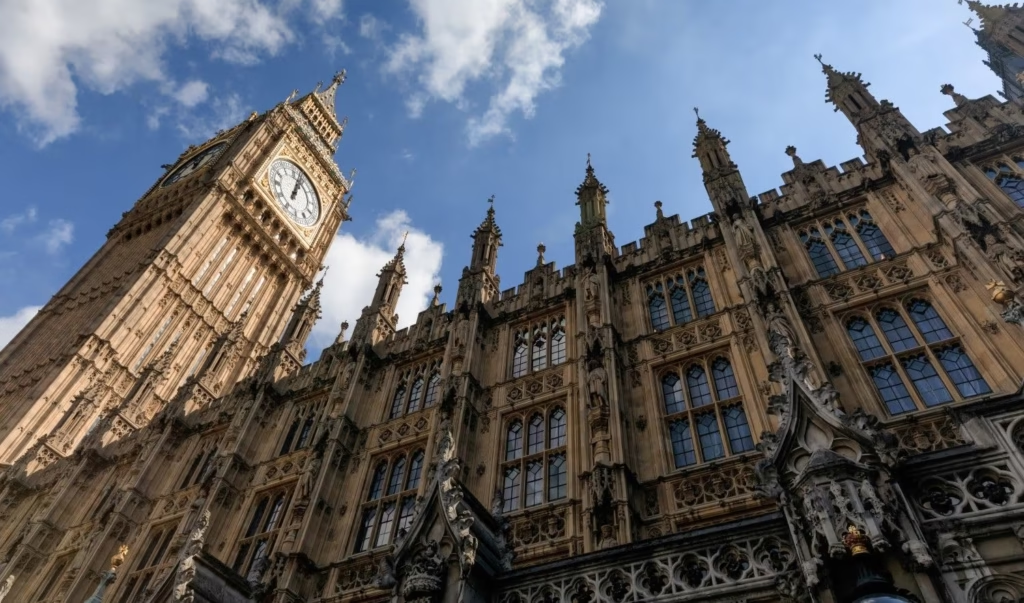
At the heart of the bustling metropolis of London, the Houses of Parliament stand as a testament to the U.K.’s rich political history and its evolving legislative landscape. Recently, within these historic walls, a significant discussion has emerged around the regulation of stablecoins—a type of digital currency that has gained traction in the financial world. The U.K. House of Lords, through its Financial Services Regulation Committee, has made recommendations that could reshape the future of stablecoin regulations in the country.
In a report titled “Stablecoins: Waiting for Regulation,” published on Wednesday, the committee urged the Bank of England (BOE) to reconsider its proposed limits on consumer stablecoin holdings. Stablecoins are digital tokens that are pegged to the value of traditional assets, primarily fiat currencies like the U.S. dollar or the British pound. Their appeal lies in their stability compared to other cryptocurrencies, making them a popular choice among consumers and businesses alike.
The BOE’s initial proposal included imposing a limit of £20,000 (approximately $27,000) per individual and £10 million ($13.5 million) per business on stablecoin holdings. This move was met with skepticism and concern from industry stakeholders, who feared that such stringent restrictions could stifle innovation and make the U.K. less competitive compared to neighboring markets that might not impose similar constraints.
The House of Lords committee highlighted the early stage of the U.K.’s GBP stablecoin market and recommended that instead of imposing preemptive limits, the BOE should monitor the market’s growth. The committee emphasized that holding limits should only be established if financial stability risks become evident. This approach reflects a desire for a balanced regulatory framework that fosters innovation while safeguarding financial stability.
Moreover, the committee raised concerns about the BOE’s requirement for stablecoin issuers to back at least 40% of their assets in unremunerated central bank deposits. They argued that such a requirement could significantly impact the business viability of stablecoin issuers in the U.K., potentially driving them to more favorable regulatory environments abroad.
In response to the committee’s findings, the Bank of England appears to be reconsidering its stance. Sarah Breeden, the BOE’s deputy governor for financial stability, acknowledged last month that the initial proposals might have been “overly conservative.” She indicated that the central bank is actively exploring alternative strategies to manage the risks associated with stablecoins as they become more prevalent in the financial landscape.
As the U.K. navigates the complexities of regulating digital currencies, the discussions taking place within the Houses of Parliament serve as a crucial reminder of the importance of creating a regulatory environment that encourages innovation. The balance between regulation and market growth will be pivotal in determining the U.K.’s position in the global financial ecosystem.
In conclusion, the recommendations from the House of Lords committee reflect a growing recognition of the need for a nuanced approach to stablecoin regulation. By advocating for monitoring rather than preemptive limits, the U.K. is poised to create a regulatory framework that not only protects consumers and the financial system but also nurtures the burgeoning digital currency market, ensuring that the U.K. remains an attractive destination for financial innovation.