
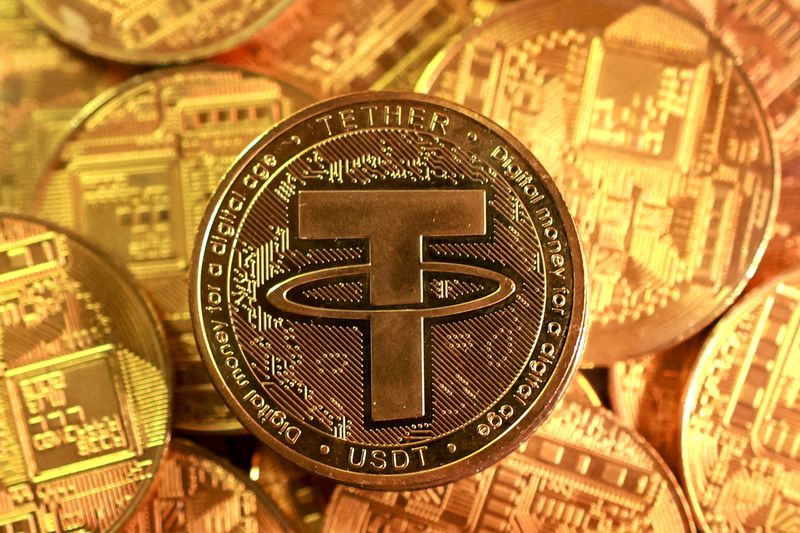
Tether Reduces Gold Purchases as Part of Its Stablecoin Backing Strategy
By Polina Devitt
LONDON, May 1 (Reuters) – Tether, the issuer of the world’s largest stablecoin, has recently made headlines by slowing its purchases of gold to back its reserves in the first quarter of 2023. According to its quarterly report released on Friday, the company reduced its gold acquisitions to approximately 6 metric tons, a significant decrease from the 27 tons purchased in the previous quarter (October-December 2022).
Tether has become a noteworthy player in the gold market over the past year, actively buying gold to enhance its reserves backing the Tether USDT stablecoin, which operates as a digital dollar. As of now, there are $189.5 billion worth of USDT tokens in circulation, alongside Tether’s gold-backed token, Tether XAUT, which has $3.3 billion circulating in the market.
The fundamental premise behind Tether’s operations is straightforward: each USDT token is designed to be equivalent to one U.S. dollar, backed by an equivalent value held in reserves. When a user deposits a dollar with Tether, the company issues one USDT and retains assets of equivalent value, which predominantly include U.S. Treasury bills. This reserve structure is intended to ensure that users can redeem their USDT for dollars whenever necessary.
As of the end of March, Tether’s reserves backing the USDT stablecoin included gold valued at approximately $19.8 billion, equating to about 132 metric tons at current market prices. This figure reflects a slight increase from 126 tons reported at the end of December 2022. Notably, the composition of Tether’s reserves is heavily weighted towards U.S. Treasury bills, which are valued at around $117 billion, with gold accounting for about 10% of the total reserves. Additionally, Bitcoin constitutes $7 billion of the reserves.
For Tether’s gold-backed token, XAUT, it has been reported that the company currently holds 22 tons of gold, an increase of 6 tons from the previous quarter. When combined with the gold reserves for USDT, Tether’s total gold holdings reach approximately 154 tons. This substantial quantity places Tether within the top 20 gold-holding entities globally, surpassing countries like Brazil, which possesses 172 tons, according to data from the World Gold Council.
While Tether has not publicly disclosed its complete gold holdings, it is likely that the actual quantities are even larger. CEO Paolo Ardoino indicated in January that the company aimed to allocate 10% to 15% of its $20 billion investment portfolio toward physical gold. However, Tether’s strategy to actively manage its gold investments faced challenges. The company had initially planned to hire two major traders by late 2025 but opted to terminate those contracts in March, citing organizational constraints arising from the supervisory structure above the traders.
As Tether navigates the complexities of backing its stablecoin with various assets, the recent reduction in gold purchases raises questions about its future strategy in the volatile world of cryptocurrency and precious metals. The interplay between stablecoin liquidity, asset backing, and market conditions will undoubtedly continue to shape Tether’s approach in the months to come.
(Reporting by Polina Devitt; Editing by Susan Fenton)