
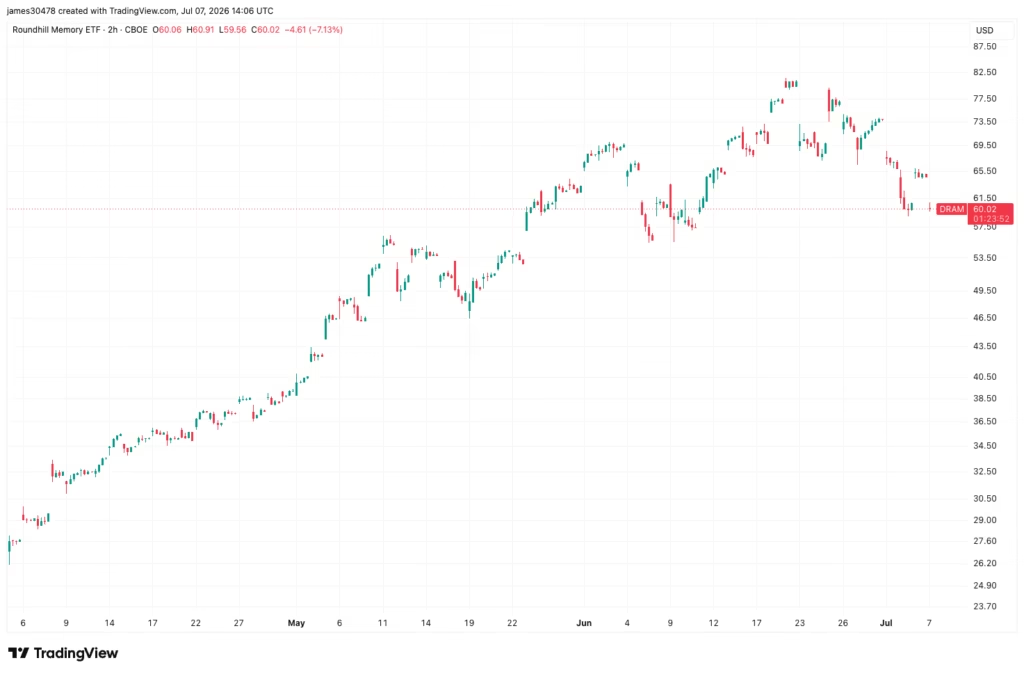
Title: Navigating the DRAM ETF Landscape Amid Shifting Market Dynamics
Introduction
In the ever-evolving semiconductor market, the recent fluctuations in the stocks of major players like Samsung and SK Hynix have sent ripples through the DRAM ETF (Exchange-Traded Fund) sector. Despite Samsung reporting record quarterly profits, its shares fell nearly 7%, while SK Hynix also experienced a downturn in anticipation of its listing in the U.S. This phenomenon raises questions about the broader expectations surrounding AI chipmakers and their future in a rapidly changing technological landscape.
Samsung’s Stellar Performance vs. Market Reality
Samsung Electronics, a titan in the semiconductor industry, recently announced impressive quarterly profits attributed to robust demand for memory chips and a surge in AI-related applications. These results, however, failed to buoy investor sentiment, leading to a notable decline in its share price. Analysts suggest that this drop may reflect a broader skepticism among investors regarding the sustainability of high valuations in the semiconductor sector, particularly as competition intensifies.
The decline in share prices is indicative of a potential market correction, as investors recalibrate their expectations in light of recent trends. The surge in demand for AI chips has led to sky-high valuations, but as companies like Samsung and SK Hynix navigate the complexities of production and supply chain constraints, the reality of the market may not align with the optimistic projections.
SK Hynix: A New Listing Amidst Uncertainty
SK Hynix is poised to make its entry into the U.S. market with its upcoming listing. However, the company’s stock also faced pressure in anticipation of this move. With the semiconductor industry in a state of flux, the timing of the listing raises questions about how investor sentiment will react to new entrants in a market dominated by established players.
The potential for increased competition from emerging markets, particularly China, adds another layer of complexity. As companies like Zhipu pursue custom AI chips tailored to their open-source models, the competitive landscape may shift significantly. This could challenge the dominance of U.S. semiconductor firms and reshape the supply chain dynamics within the industry.
China’s Zhipu: A Rising Contender
China’s Zhipu is making waves in the semiconductor space by focusing on custom AI chips designed to support its rapidly expanding open-source models. This strategic move underscores a critical shift in the semiconductor landscape—where efficiency and cost-effectiveness are paramount. As Zhipu and similar companies ramp up their development of AI infrastructure, they pose a formidable challenge to the established players in the market.
The implications of this shift are profound. If Chinese companies can successfully deliver more efficient AI solutions at lower costs, they could undermine the competitive edge traditionally held by U.S. firms in the AI chip market. As the industry evolves, it will be essential for established companies to innovate continuously and adapt to the changing demands of the market.
Conclusion
The recent performance of Samsung and SK Hynix serves as a crucial reminder of the complexities within the semiconductor industry and the DRAM ETF landscape. As expectations for AI chipmakers evolve, driven by both technological advancements and emerging competition, investors must remain vigilant. The entry of companies like Zhipu into the market could redefine the competitive dynamics, making it increasingly important for established players to adapt to new realities.
In this climate of uncertainty, the DRAM ETF represents both opportunity and risk. Investors should carefully evaluate the shifting landscape, considering both the potential for growth in AI technologies and the challenges posed by rising competition. As the semiconductor industry continues to evolve, staying informed and agile will be key to navigating the intricacies of this dynamic market.